

The smell hits you first.
Roasted chiles, grilled carne, fresh tortillas still warm in paper.
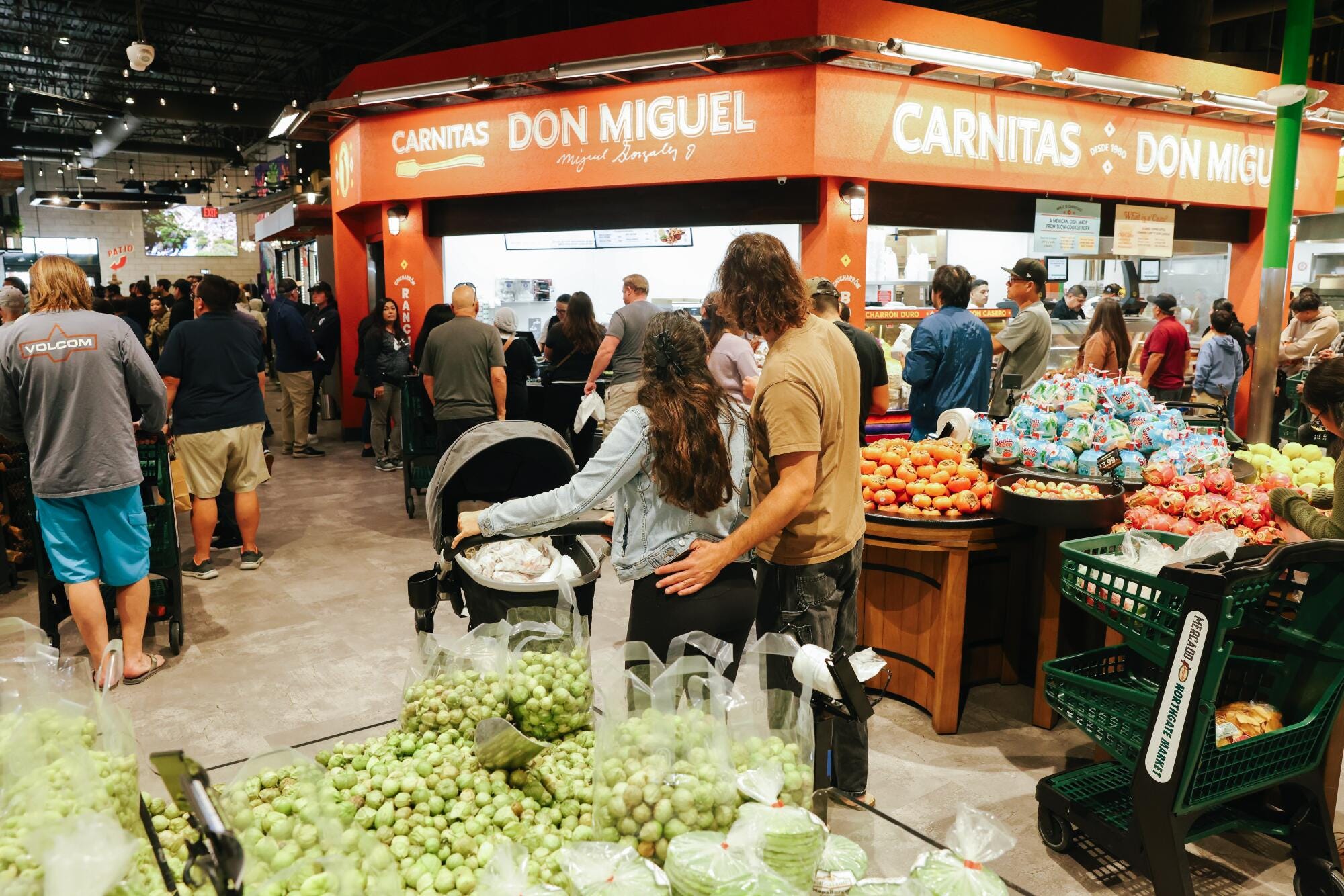
A kid tugs on his mom’s sleeve as she points toward a juice bar where mangos are sliced to order.
The sound of Spanish music hums in the background, blending with laughter and clinking trays.
For a moment, I wasn’t in Georgia.
I was walking the streets of Mexico.
This wasn’t a food hall.
It wasn’t a traditional supermarket either.
It was something else entirely.
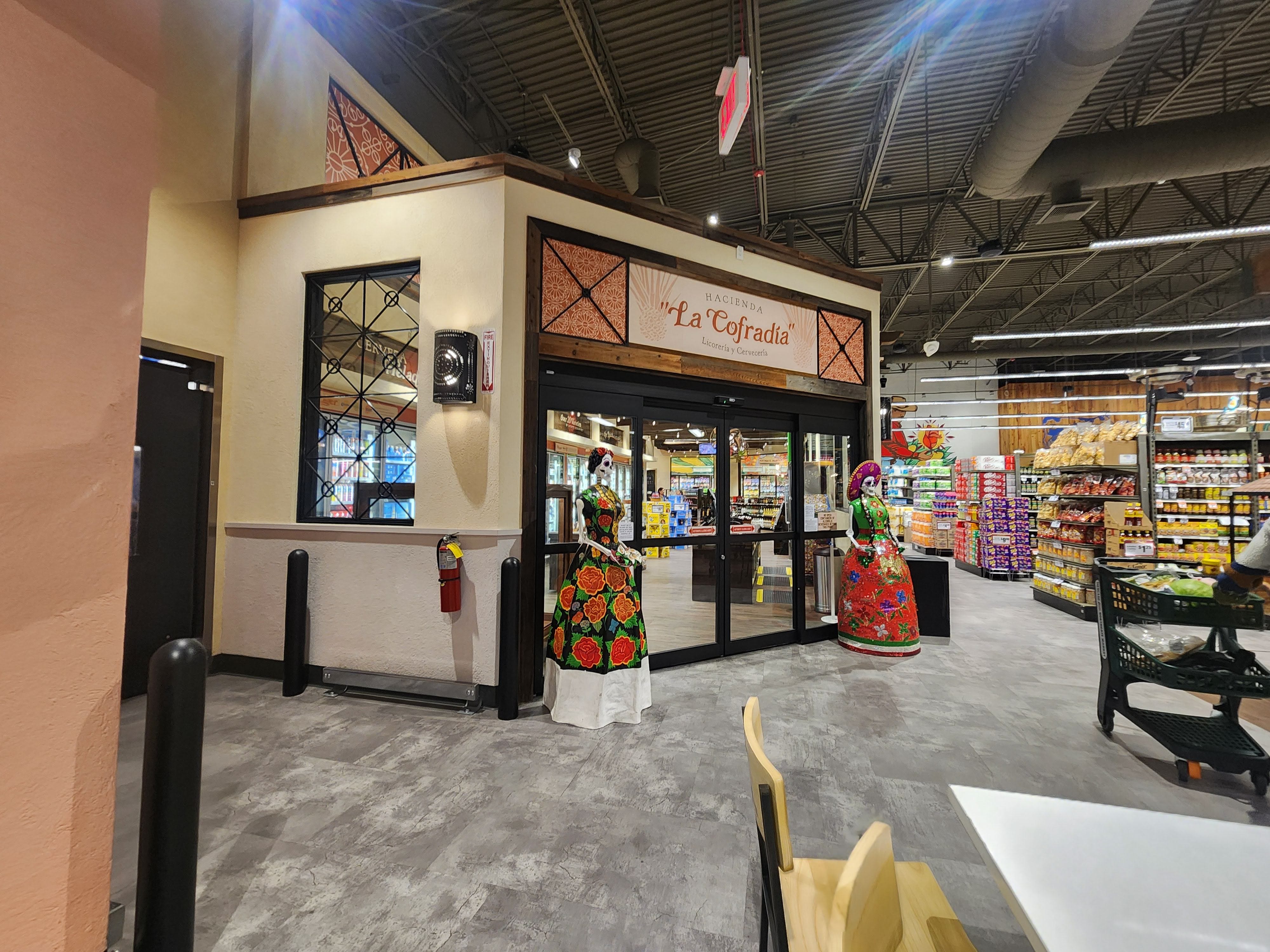
Our walk through of Northgate Mercado.
A new kind of grocery experience
Across the U.S., Hispanic grocers are rewriting the grocery playbook.
Concepts like Mi Tienda (HEB’s Texas-born spin-off), Northgate Mercado in Costa Mesa, and Talpa in the Southeast are leading a quiet revolution — turning grocery shopping into an activated experience.
Instead of sterile aisles and self-checkout lines, these stores invite you to stay.
To eat, to gather, to listen to live music on a Saturday afternoon while your kids pick out pastries.
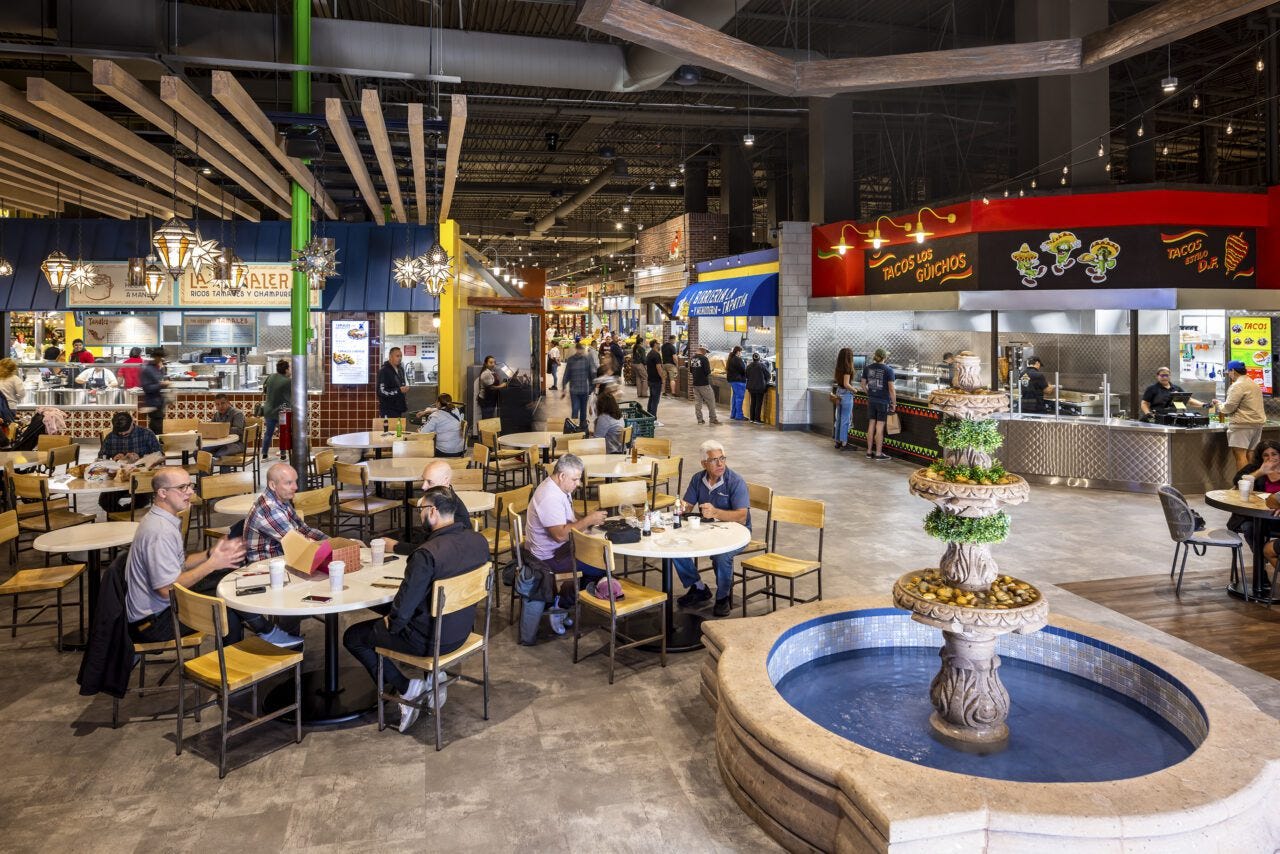
Kevin Kelley’s design for Northgate Mercado is one of my favorites — a seamless blend of food hall, grocery, and gathering space. You can smell the al pastor before you see it. Prep happens at a window, not behind a wall.
You feel part of it.
This is retail that feels alive.
What’s driving the boom
Population growth plays a role, sure. But this isn’t just demographics.
It’s demand for flavor.
Consumers — not just Hispanic families — are craving grocery experiences that reflect curiosity and culture. They’re walking past the “vanilla” shelves of big-box chains like Kroger, Publix, and even traditional H-E-B stores to seek out spaces that offer something more real, more human. (Mi Tienda is a H-E-B concept).
They want handmade tortillas over shrink-wrapped ones.
They want authenticity over algorithmic planograms.
They want to feel something when they shop.
📸:https://www.retailtouchpoints.com/topics/retail-store-design/new-store-concepts/mercado-gonzalez-taps-mexican-culture-to-reinvent-the-stale-grocery-store-model
📸https://www.latimes.com/food/story/2024-02-27/mercado-gonzalez-costa-mesa-latino-santa-ana-immigration
More than markets — they’re community engines
These grocers have become gathering spaces — where a weekend shop turns into lunch with friends and an impromptu dance to the live mariachi band.
In some of these centers, you can’t even find a parking spot on the weekend. And that’s the point.
It means the model works.
By activating every square foot — kitchens, counters, outdoor seating — they’re extending dwell time and reshaping what an anchor tenant can do for a community. It’s no longer about foot traffic; it’s about belonging.
The economics and the echo of history
Most of these markets started as family businesses — local, regional, rooted in story.
Mi Tienda may be owned by grocery giant H-E-B, but its spirit still feels intimate, neighborhood-driven. Others, like Talpa, are expanding thoughtfully through the Southeast, keeping that sense of pride intact.
Their rise also reminds me of something we’ve lost sight of — the Robinson-Patman Act of 1936.
It was meant to protect small businesses from discriminatory pricing by large chains, an attempt to level the playing field. But it was never strongly enforced, and we watched the “supermarket” swallow the “corner store.”
Decades later, these new-generation grocers are bringing that spirit back — proof that culture, not scale, creates loyalty.
What’s next
If this trend tells us anything, it’s that the future of grocery isn’t bigger.
It’s closer.
Closer to home, to flavor, to connection.
We need more small-format markets, more corner stores that double as community tables.
Because people aren’t just shopping for food anymore.
They’re shopping for belonging.
Why Developers and Planners Should Pay Attention
These stores increase dwell time and community engagement far beyond a typical grocery anchor.
They show that authenticity and activation outperform sterile convenience.
They can revitalize aging centers and turn overlooked retail into cultural landmarks.
And they remind us: the best developments don’t just sell products — they feed people’s souls.
👉 Ready to turn your square footage into soul per square foot?
Let’s start with a conversation. Schedule time with me here.